Category: Uncategorized

On The Move

On The Move

“The brain is a wonderful organ; it starts working the moment you get up in the morning and does not stop until you get into the office.”
Robert Frost

Some people have an office which they go into every day.  Others work from home.  For more and more people, it’s neither of the above.  From Starbucks to hotel lobbies, members clubs to park benches, everyone has their own formula. 

Day 31 - Desk

This has been a month of changes for me, one of which has been moving into a new office, close to Piccadilly Circus.  For some time before that, I was working from several locations, and so I thought that it would be useful to share a few of the good places I’ve found along the way.

Offices;

Finding a new office can be a fiddly old process and so here are three organisations I found especially useful.

1) Talk to Instant Offices if you’re looking for serviced offices and more of a ‘plug-and-play’ solution.  Instant, founded by Rob Hamilton, has been incredibly successful over the past few years.  I was looked after by Chris Stewart who found us our space with Reflex (see below).

2) Reflex are the company we ended up with because they offer flexible licences in non-branded offices around Central London.  Justin has looked after us extremely well. 

3) If you are looking for something a bit longer terms (perhaps you’re moving your growing business to its new home), then I recommend Devono.  Several years ago they found us an amazing space in the Piazza in Covent Garden and worked alongside me, visiting the properties, while we worked through what it was we were really after.  The founder Robert Leigh has always been extremely helpful and it was good to catch up with him some time ago at the Growing Business Young Guns Awards

Finally, if you’re just looking for a couple of desks to share or sublet within someone else’s office, have a look at Desk Space Genie.  Within a few minutes I had found a couple of good options which I was visiting ten minutes later, as many people listing are happy for you to pop in and have a quick look.

All of this raises the question of whether you really need an office these days anyway, and for many people I think that the answer is no. 

If you’re looking for something of a halfway house between coffee-shops/hotels or homeworking (by the way, check out the brilliant Emma Jones’ Enterprise Nation on that front) and a full-on office, then why not have a think about one of these options…

Clubs; 
100_2104
Adam Street is a private members club in London (just off the Strand) aimed at entrepreneurs and freelancers.  I’ve been a member for years and like the team very much.  They have great event spaces, a peaceful (small) library upstairs where you can pop in to work for an hour or two and fantastic food.  They also have one of London’s best staff members, Jenny Cox. 

One Alfred Place  is a business club in Bloomsbury and is a terrific space.  I’m on the committee, so I’m a bit biased.  What I like about it is that it is divided into some wonderfully light, spacious areas.  There’s a bank of workstations where you can just sneak away to graft on your laptop for an hour.  There are comfy sofas.  There’s a good restaurant and I can often be found enjoying an early morning breakfast meeting in one of the booths.  It is pricier than Adam Street and tends to appeal to business people outside London who come in from time to time and need somewhere reliable to meet and entertain clients or get things done.

Like Minds Club;  Newly opened by the excellent Drew Ellis, this is described as ‘a social space to make  physical connections from virtual conversations’.  It uses some of the impressive facilities of a good hotel on Northumberland Avenue including a great boardroom which members can book. 

Other popular clubs include The Hospital in Covent Garden (for people in the creative industries), Soho and Shoreditch House (tricky waiting list but I think that Shoreditch House is one of the most impressive spaces in  London) and Century on Shaftesbury Avenue. 

The challenge with a couple of these places is that they are really just best for meetings and not so great if you want somewhere to plug in your laptop and get some work done for a couple of hours.  If you are looking for more of a co-working space where you might spend half a day or more, then have a look at these three, all of which, by coincidence, use the word ‘hub’…

Co-Working Spaces;

Hub Culture;  Founded by Stan Stalknaker (an excellent chap), this is an online community which has several clubs (or pavilions as they call them), one of which is just off Carnaby Street in London.  I was struck by how reasonable this is (membership includes teas and coffees, as does Like Minds above) and how refreshingly international the member base is.

TechHub;  Founded by Mike Butcher and Elizabeth Varley (I must stop waxing lyrical about everyone I mention on this blog, but they too are great!) and sponsored by Pearson and Google, this is a co-working space just by Old Street tube, for tech companies looking for a place to base themselves (they also have hot-desking available).

The Hub has spaces in 12 cities. Its London bases are in Islington and Kings Cross and I hear that another is being plotted for Paddington.  It tends to appeal to more social businesses and enterprises and hosts some excellent events.  Guess what?  Yes, the founder, Jonathan Robinson is a (seriously) fantastic chap. 

Ideas;

Well a post like this would not be complete without me chucking in a couple of random and quite probably unfeasible ideas.  So here goes;

Why doesn’t one of the UK’s endowment organisations launch its own co-working space?  Here’s looking at you NESTA.  And you Unltd.  Also, why don’t some of the leading business networks have a go too?  I’m sure that lovely Thomas and Penny Power at Ecademy have thought about this, however perhaps it’s just a question of the right people conspiring at the right time… 

Wouldn’t it be fun to approach a bedraggled coffee-shop owner somewhere, and offer them a deal?  Theywould keep owning and running it, someone else will promote it.  Up go the new signs (Welcome to Cafe Unltd, Cafe NESTA, Cafe Ecademy). It’s a  three month experiment.  Based on some of the empty coffee shops I pass, how could the takings possibly go down?     

So if you’re looking for a new office or a new place to work and meet people, hopefully there’s something useful in this post for you.  Please let me know if you have other favourite places which people should know about!


Four Formats

Four Formats

 POST-IT sticky note

Sometimes a room above a pub is all that you need for an enjoyable event.  It can help to include some guests, some drinks and some good conversation, I suppose… 

Sometimes though, it is fun to have a format to help people to connect or to spice things up.  Here are four techniques which I’ve enjoyed using over the past few months…

1)  Question Time Dinner. 

I used this earlier this month, for nine of us, around a restaurant table.  I ‘chaired’ the discussion part of the dinner, although any of the guests could have done that.  Everyone submitted a question, anonymously, on a scrap of paper.  The question could be big or small, silly or serious.  The general topic of the evening happened to be ‘Government meets Technology’ but the questions didn’t have to be on that subject.  I read through the scraps of paper and ordered the questions in a way which I found interesting.  For an hour or so during dinner we moved through half a dozen of the questions, which ranged from “Does it matter if the Chief Constable of Sussex Police is on Twitter?” through to “What would you do if you had the keys to Number 10?”.  Some questions involved going round the table for answers, others were more of a free-for-all discussion.  It seemed to work well, and I’d advise taking short breaks between sets of, say, three questions to break up the evening.

2)  7s (Sevens)

Seven of us meet every six weeks for dinner.  We tend to meet at each other’s houses and either cook, or order a take-away.  It is the same group each time.  I was invited into the group by a fantastic entrepreneur, who for reasons of confidentiality and gratuitous mystery, I had better not reveal.  The only excuse for missing ‘Sevens’ is if you are out of the country.  Meetings are completely off the record.  We discuss both business and personal life.  It is the same seven every time.  Although we will start and end with informal drinks, the ‘meeting’ bit is chaired by one of the seven, decided on the night.  This is one of the most enjoyable groups I’ve ever been part of. It is a safe forum to share what we’ve been up to, our plans and our challenges.  More than anything, it’s great fun.  We trust each other.  It works well and I’d encourage anyone to consider setting up their own group.

networking on thurs & fri tn2020

3)  Speed Networking

Well I couldn’t miss this one could I?  I’ve hosted hundreds of  Speed Networking sessions for everyone from Ambassadors to Dragons, at least one Prime Minister and more than a few Chief Executives.  This month I Speed Networked with Sir Gus O’Donnell, head of the Home Civil Service, which I enjoyed enormously.  The format could not be simpler – I wish more people would do it!  You need a whistle and a stop-watch.  Tell people (this is of course optional), that there are three rules.  You must meet people you’ve never met before, you can talk about whatever you like, and when you hear the whistle blow, you must change partners.  It works best when introduced as a ‘game’ for about fitteen to twenty minutes during an event.  Too long and the energy drops.  I have found that it works especially well if you worry that people at an event might not mix, or might stick to their specific ‘groups’ and you want to shake things up a bit. 

4)  Future Bios

I used this recently in Chicago with the British Council and had some good feedback.  I made the point that for most people, our ‘bio’ tends to talk about we do today and what we have done.  I’m more interested in what people are about to do.  What they are plotting.  I invited the group (about 100) to take a piece of A4 paper each, and to write on it their name, what they were looking for practical help with, and the sort of things that they might be able to offer to others.  Sometimes these could say ‘talk to me, John’, sometimes they would list the name of an organisation or website that the person should check out.  We then took an hour to browse each other’s pieces of paper.  If we saw something we thought we could help with, we stuck a (good old) Post-It note on the page.  After an hour, everyone returned to their own piece of paper.  It was like Christmas morning!  Several people had 15 or more ‘offers’ of help.  This session took place during a busy week, and the participants had at least another day to follow up with any of the people who they connected with in this session.  I think that it could also work during a one-off event, provided that there was enough time to follow up, and enough methods for navigating the group and finding people.

I’m inspired by several friends here in the UK to keep experimenting with new formats.  Steve Moore, Lloyd Davis and Johnnie Moore are just three people who are always prepared to take a risk when it comes to bringing people together in interesting ways.  What formats have worked for you over the years, and what would you like to see more of?

Quotables

Quotables

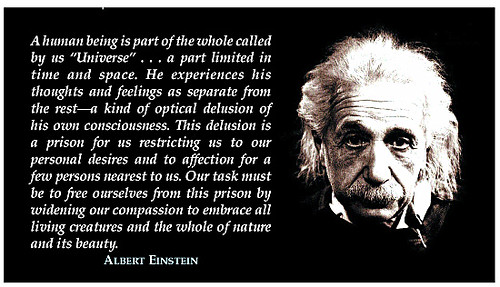
 einstein quote

I’m enjoying this new site, Quotables, by the brilliant and award-winning Adam Gee at Channel 4, and the clever folks at Mint DigitalArts Council England have supported their mission to enable people to share their favourite quotations online.

In the words of Sir Winston Churchill;

“It is a good thing for an uneducated man to read a book of quotations.”

Based on that observation, I’m confident that he would have been a fan of Quotables.  I for one will be checking in regularly for the latest pearls of wisdom.  It’s a good place to share the odd inspiring lines as you stumble across them. 

Here then, is something I read a couple of days ago, by Henry David Thoreau, writing in Walden;

“If a man does not keep pace with his companions, perhaps it is because he hears a different drummer. Let him step to the music which he hears, however measured or far away.”

I hope you’ll join me on Quotables and I look forward to hearing your favourites!

Exploring the Big Society

Exploring the Big Society

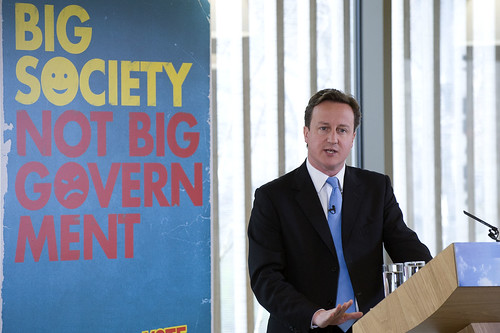
CPP_Conservative_party_344 

Here in the UK, there is much talk, led by our new Prime Minister David Cameron, about what he calls the “Big Society”.  In his words;

“It’s time for something different, something bold – something that doesn’t just pour money down the throat of wasteful, top-down government schemes.

The Big Society is that something different and bold.

It’s about saying if we want real change for the long-term, we need people to come together and work together – because we’re all in this together.”

BBC Radio 4’s chief political correspondent, Norman Smith, explains;

“The ‘big society’ is David Cameron’s Big Idea. His aides say it is about empowering communities, redistributing power and fostering a culture of volunteerism.”

Returning to the PM’s words;

“The Big Society is about a huge culture change, where people, in their everyday lives, in their homes, in their neighbourhoods, in their workplace, don’t always turn to officials, local authorities or central government for answers to the problems they face but instead feel both free and powerful enough to help themselves and their own communities.”

“We need to create communities with oomph – neighbourhoods who are in charge of their own destiny, who feel if they club together and get involved they can shape the world around them.”

Over the past few weeks, I’ve spotted several people (many with considerable oomph of their own) writing thoughtfully about the Big Society.  This post is simply my way of sharing their thoughts;

As soon as I read this post by Adil Abrar (founder of  Sidekick Studios , I wanted to meet him.)  He writes;

“Is the Big Society fully-formed? No, but nor should we expect it to be. It’s early days, it seems interesting enough, and the fact that it isn’t defined and there is still space to create it, actually makes it more interesting. And that’s the ultimate point.”

“It’s up to us – social entrepreneurs, communities, technologists, public servants, business – to make it mean something. As far as I’m concerned, politicians should just set the direction, do the big speeches, and then get out of the way as quickly as they can. I’m not looking for solutions from them. We tried that. It was a bit rubbish.”

“Big Society isn’t about politicians. It’s about us. And the sooner we get on with it, the sooner we can start making it good.”

For many people, the quickest way to ‘get’ the big society is to see examples of it in action.  This excellent post by David Barrie has ten projects to be looking at.  He concludes;

“What’s exciting about almost all of these enterprises is that they tend to merge the profit motive with a moral imperative – and many directly confront social need through the businesses themselves.

Almost all of these ventures – in a politically non-partisan way – trigger volunteering and social action and act as touch-point for providing a public service, be it care for seniors, healthy living, food security, literacy or managing waste in the built environment.

Most are trading systems. Almost all elicit support by association. All are optimistic.”

Arguably the most diligent chronicler of conversations about all things big society is David Wilcox.  He is an extremely thoughtful guy who gives generously of his time reporting numerous events.   If you don’t have time to read some of his posts, then at least follow his updates on Twitter.

A note of caution is sounded by David Robinson, someone I got to know during my two years as a member of the Council on Social Action.  You would have to speak to practically everyone in Britain before you found someone with a bad word to say about David, and this, combined with his expertise around social action makes his reflections here all the more compelling;

“Arriving for work at Community Links in Canning Town this morning I passed a long queue of people waiting for advice or practical support in this, one of the UKs most disadvantaged communities. The questions I ask of every government programme are the same today as everyday. “How does it meet their needs? How does it tackle poverty, not just money but poverty of opportunity, and what more could be done?” I’m not sure that what I know about the Big Society, or what its leading minister, Francis Maude, had to say about it last week,  helps me with the answers”

“Criticism at this stage is of course just as empty as wide eyed enthusiasm. It simply isn’t yet time for the jury to return. We could however be thinking more about the criteria for   judgement, the basis on which we might   appraise the Big Society , challenge it, build it. Our Chain Reaction network has begun this work with a statement of principles sketching our vision of the good society, outlining the principles that might underpin that vision and suggesting the expectations, for ourselves and for government that might flow from this analysis.”

David mentions Matthew Taylor’s work, leading the RSA.  This post in particular  is worth highlighting, in which Matthew says;

“As an overall scorecard I would give BS ‘fair to good’ as a big idea. As a set of policy proposals – such as the Big Society Bank, national citizens service, your square mile – I would say ‘has promise but must show delivery’. But it is as a way of judging or shaping mainstream policies across Government where I think lies the greatest potential and also the greatest current weaknesses and dangers of the Big Society.”

Finally, in this comprehensive post, Lee Bryant from Headshift explains why he is drawn to the role that social networks can play in the Big Society;

“Instead of formulating policy, and then seeking to leverage social networks as a tool or a vehicle for policy, we should instead start at the other end of the chain and try to better understand the world, and the existing social networks, in which public services seek to intervene.”

“Healthy social networks are in many ways the connective tissue of a Big Society, and encouraging their development around issues of civic importance are a key part of the process of weaning people off a dependent relationship on the state and enabling them to help each other.”

It will be interesting to see how this Wikipedia page about the Big Society evolves over time.  Likewise, there are some interesting thoughts emerging through the Big Society Network, led by Paul Twivy, who I am a big fan of, and have enjoyed exchanging ideas with over the past few months.

The final word then, to the Times, which has described the Big Society as;

“”An impressive attempt to reframe the role of government and unleash entrepreneurial spirit”.

Put like that, it sounds like my kind of idea.  You can count me in!


9 Books

9 Books


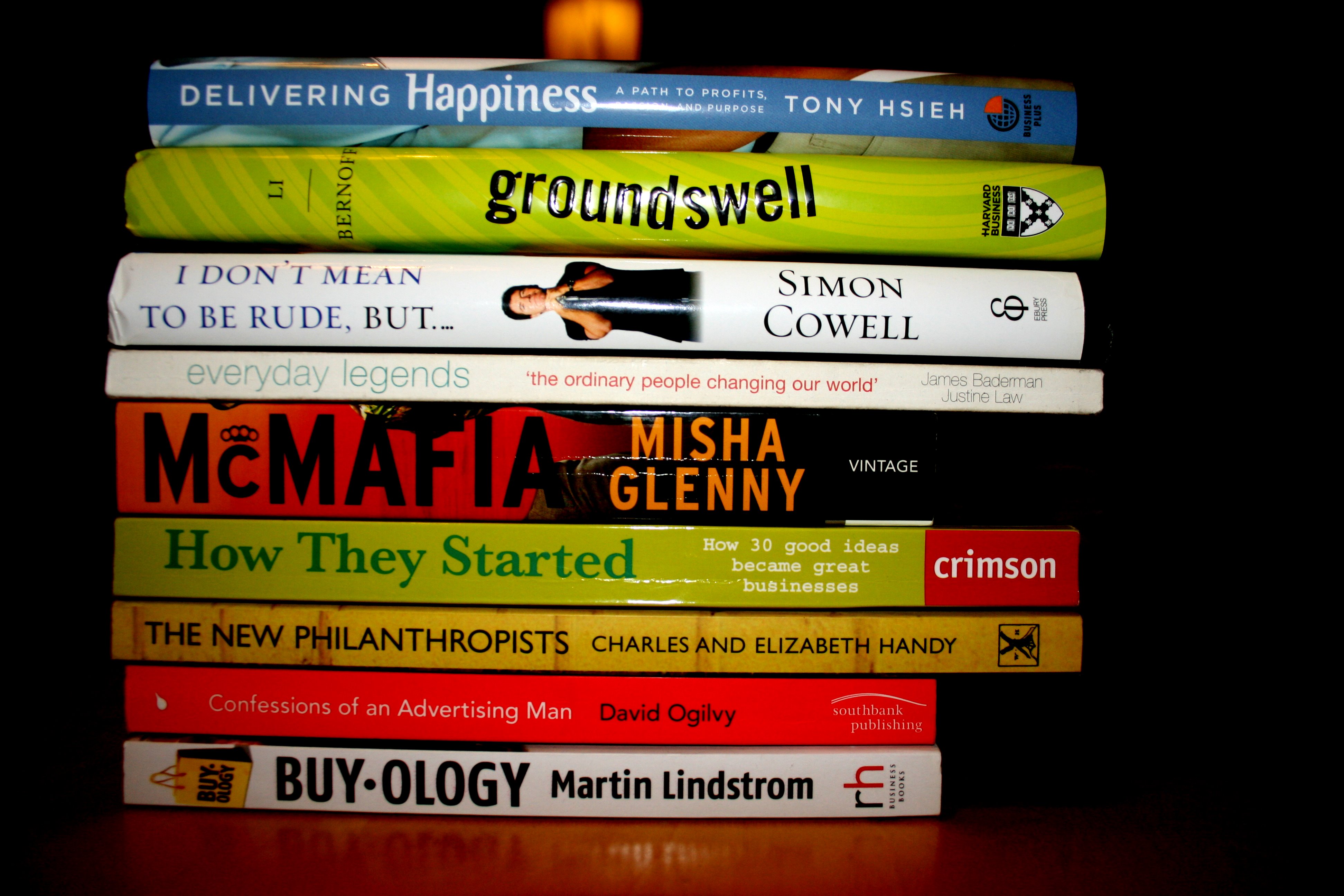
9 books which I’ve enjoyed reading.  Some old some new.  Available to borrow…

Delivering Happiness (Tony Hsieh)
Groundswell (Charlene Li, Josh Bernoff)
I Don’t Mean to Be Rude But (Simon Cowell)
Everyday Legends (James Baderman, Justine Law)
McMafia (Misha Glenny)
How They Started (David Lester)
The New Philanthropists (Charles and Elizabeth Handy)
Confessions of an Advertising Man (David Ogilvy)
Buy-ology (Martin Lindstrom)

“I have always imagined the Paradise will be a kind of library” Jorge Luis Borges

Which books (business or otherwise) have you enjoyed recently?  All suggestions appreciated!